All news

Digital Twin of
a Pipeline

An end-to-end solution for controlling and monitoring pipeline condition — covering digitization, load and safe-service-life calculations, and the preparation of maintenance plans.
Go to the service

About the product

A Digital Twin of a Pipeline is

A comprehensive and reliable service for assessing the condition of a pipeline system. We use an integrated inspection method that lets us perform 3D digitization of the network, integrate diverse diagnostic results, calculate the strength and service life of the pipeline, and identify and rank hazardous zones.

Learn more
Digital modeling of infrastructure failure makes it possible to improve the reliability, safety and efficiency of operations several times over

The work identifies the probable location and time of failure for each infrastructure element — and produces an optimal program for use and maintenance

Our services include analyzing pipeline parameters to determine its current technical condition and diagnose problems, building in-depth mathematical models of the pipeline, calculating loads, generating reports, planning repairs, managing and adjusting operating parameters, and determining the residual life and safe service periods of the structure. We help you cut operating costs by shifting from emergency repairs to preventive maintenance.

Challenges

01

No 3D model of the pipeline
Existing pipeline modeling methods can be inaccurate and outdated, making it hard to take decisions about operation and repair. There are no accurate digital models that give a complete picture of the system's condition.

02

Difficulty interpreting diagnostic data
Without a centralized system to integrate and reconcile data, the risk of missing critical data or arriving at an incorrect description of pipeline condition rises significantly.

03

High risk of accidents due to lack of forecasts
Without accurate forecasting of when and where failures may occur, there is a high risk of accidents that can lead to major losses, property damage and even threats to the environment and to people's safety.

04

Planning investment programs
When investment programs are not backed by analytical data, the company's funds are spent irrationally and opportunities for growth and development are missed.

05

Inefficient spending of the repair and maintenance budget
Without an accurate understanding of which parts of the system need repair and when, companies may spend money on unnecessary repairs, or repair costs may arise suddenly and at an inconvenient time.

06

No system for locating hazardous spots
A lack of methods for identifying and prioritizing risk zones in networks can lead to accidents, expensive servicing and repairs, and safety problems.

Capabilities

Our products use an integral methodology for diagnosing the force and stress-strain states of pipelines. Our goal is to offer you effective and reliable tools for monitoring and optimizing your infrastructure. This is the purpose of our service, designed specifically for the effective monitoring and operational optimization of pipelines of all kinds.

01 Pipeline digitization through a builder
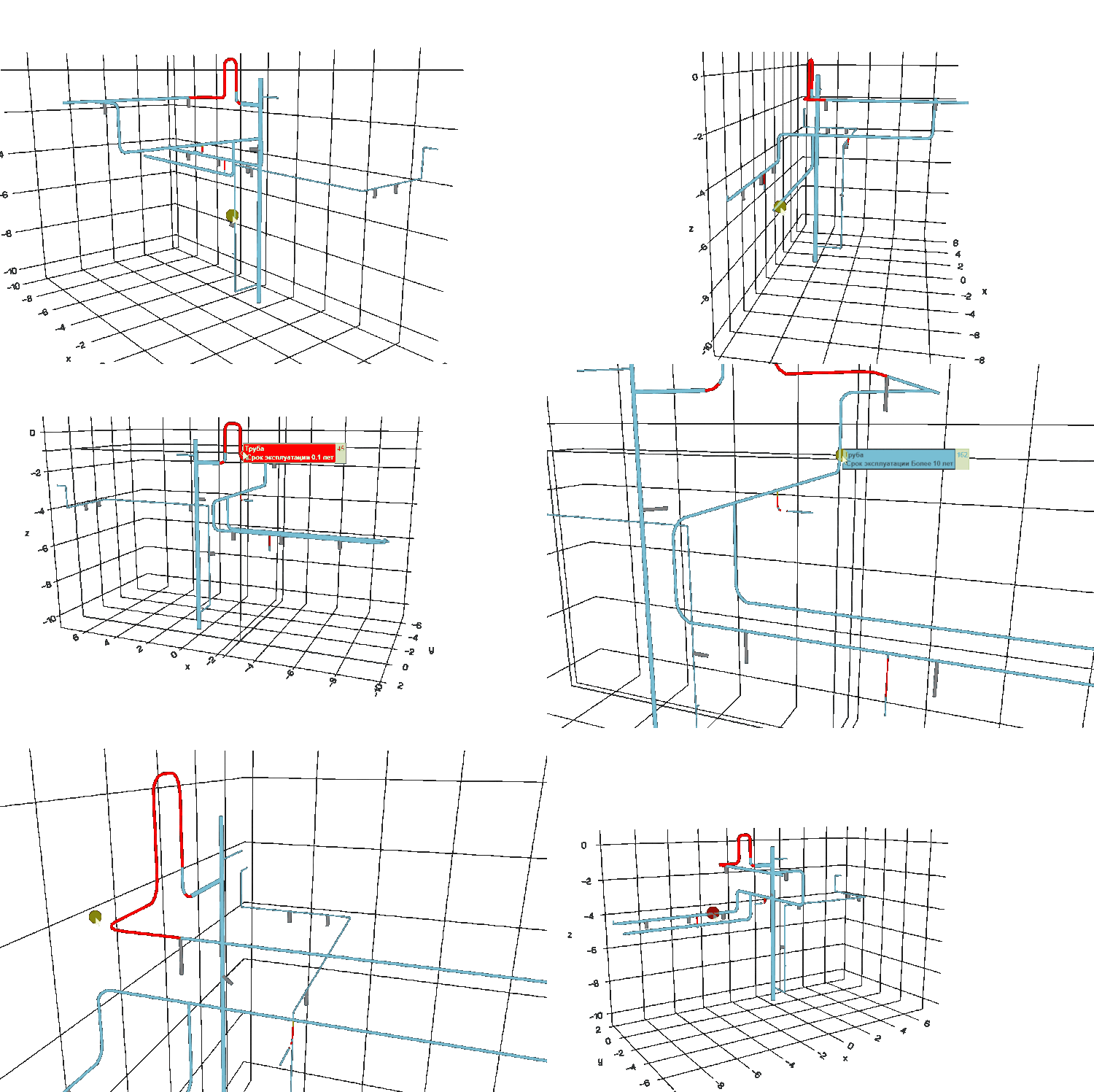
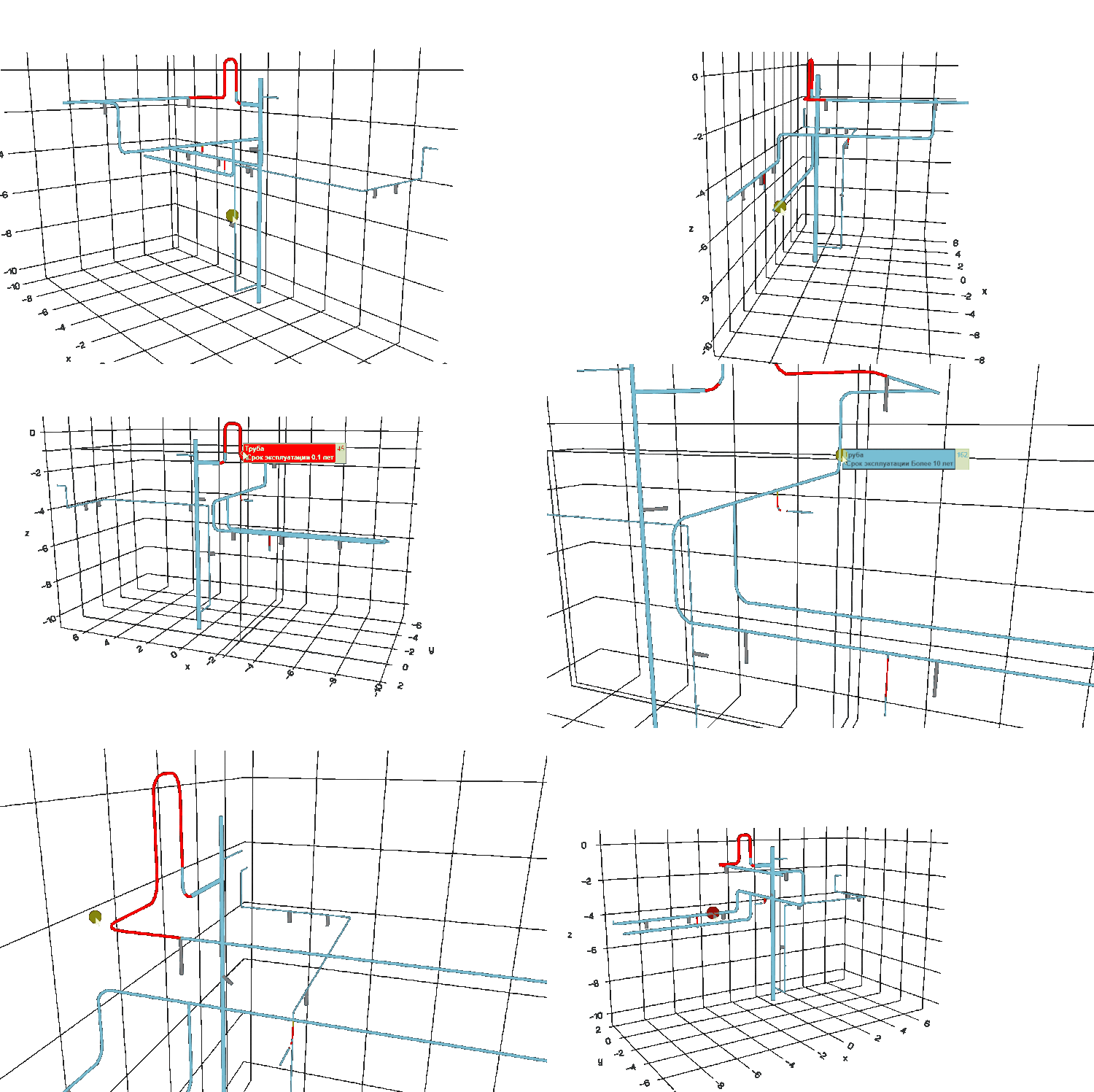
In the service you can create a 3D digital twin of your pipeline through a convenient builder, accounting for the complex topology and materials of the pipeline.
02 Physical calculation of loads on the structure
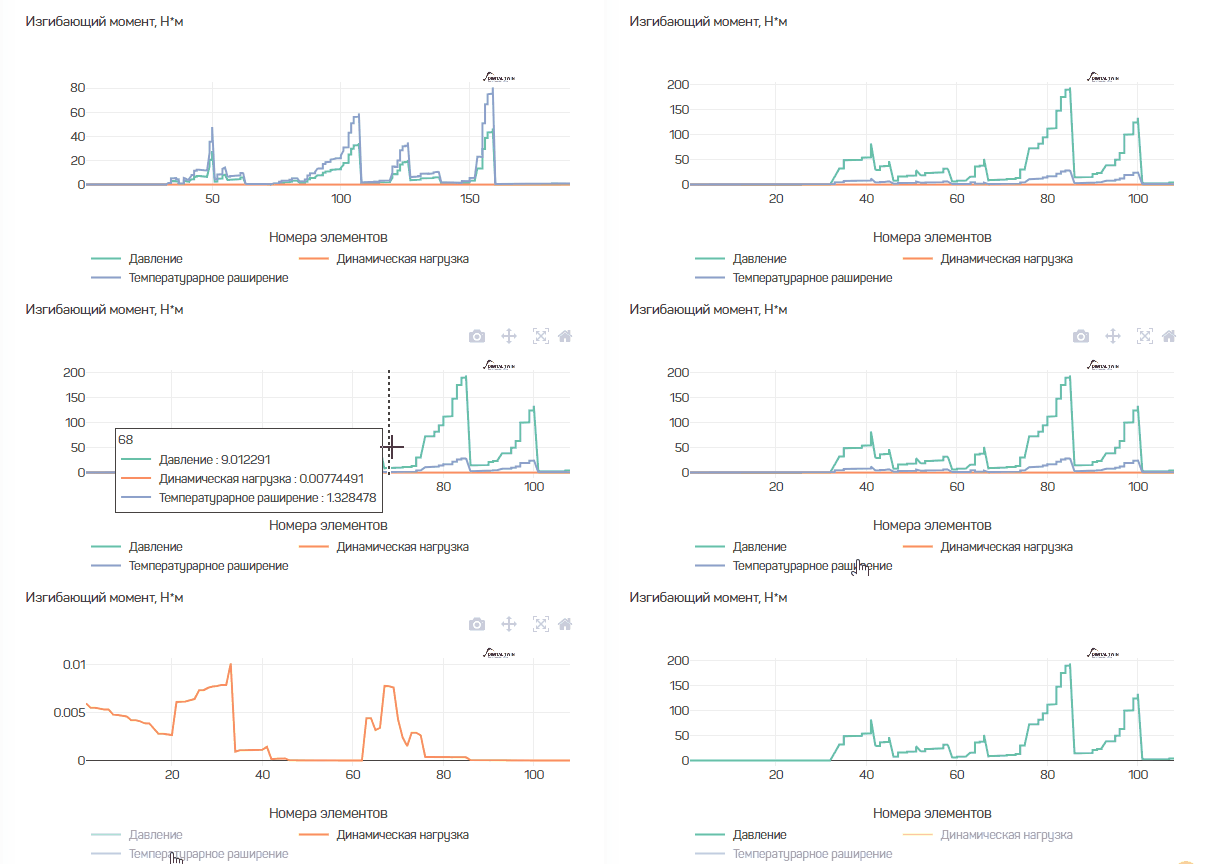
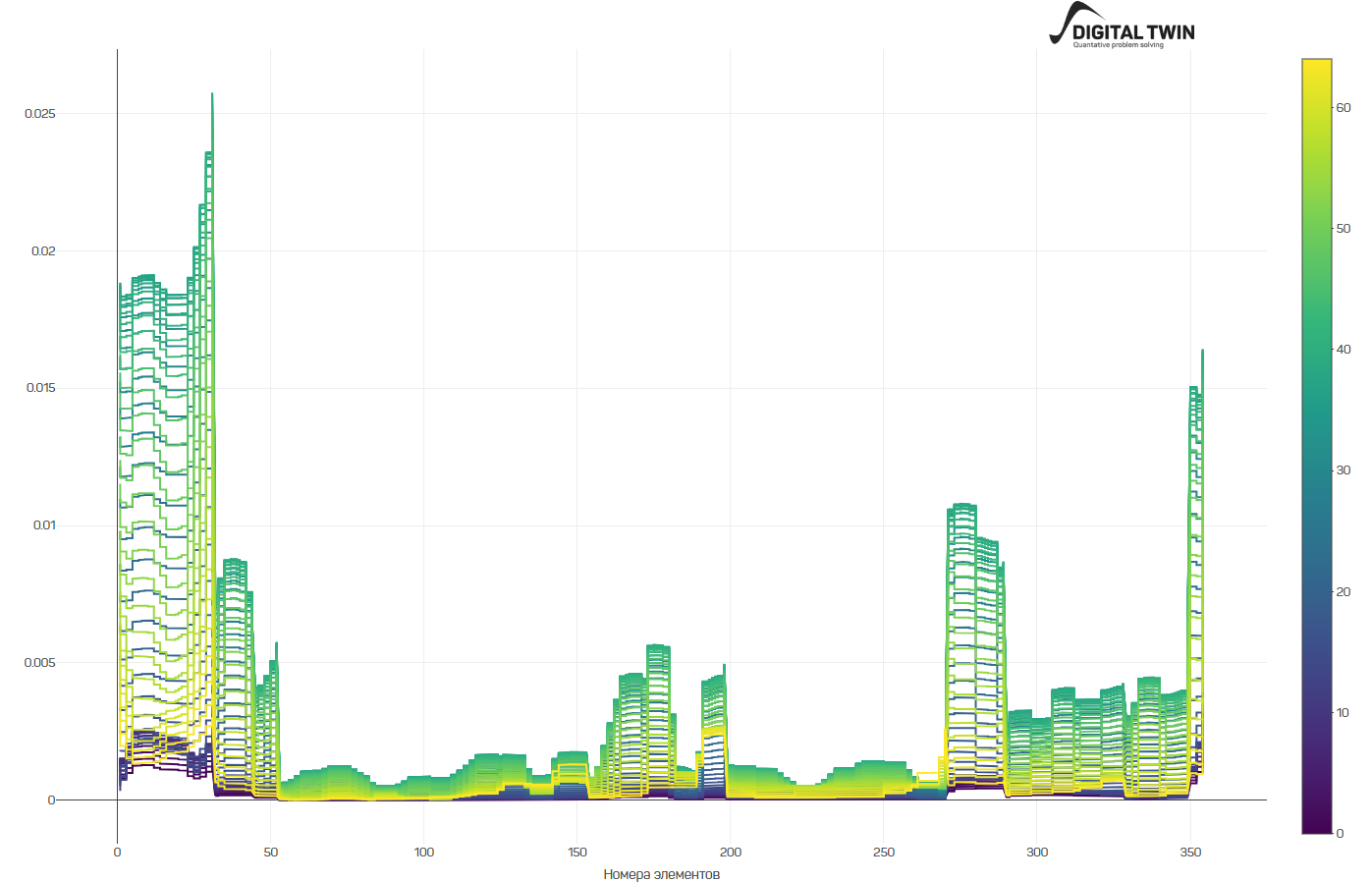
The pipeline is treated as a curved spatial frame made up of straight and bent spans. Dynamic vibrations at frequencies from 1 to 86,400 Hz are calculated on the basis of amplitude-frequency characteristics. Calculations are made of the pipeline deformations caused by weight, temperature and pressure. For each deformation, the displacements, rotation angles, torques and forces are calculated. The hoop, longitudinal and shear stresses caused by operating pressure and pressure changes are calculated.
03 Accurate modeling of all operating parameters
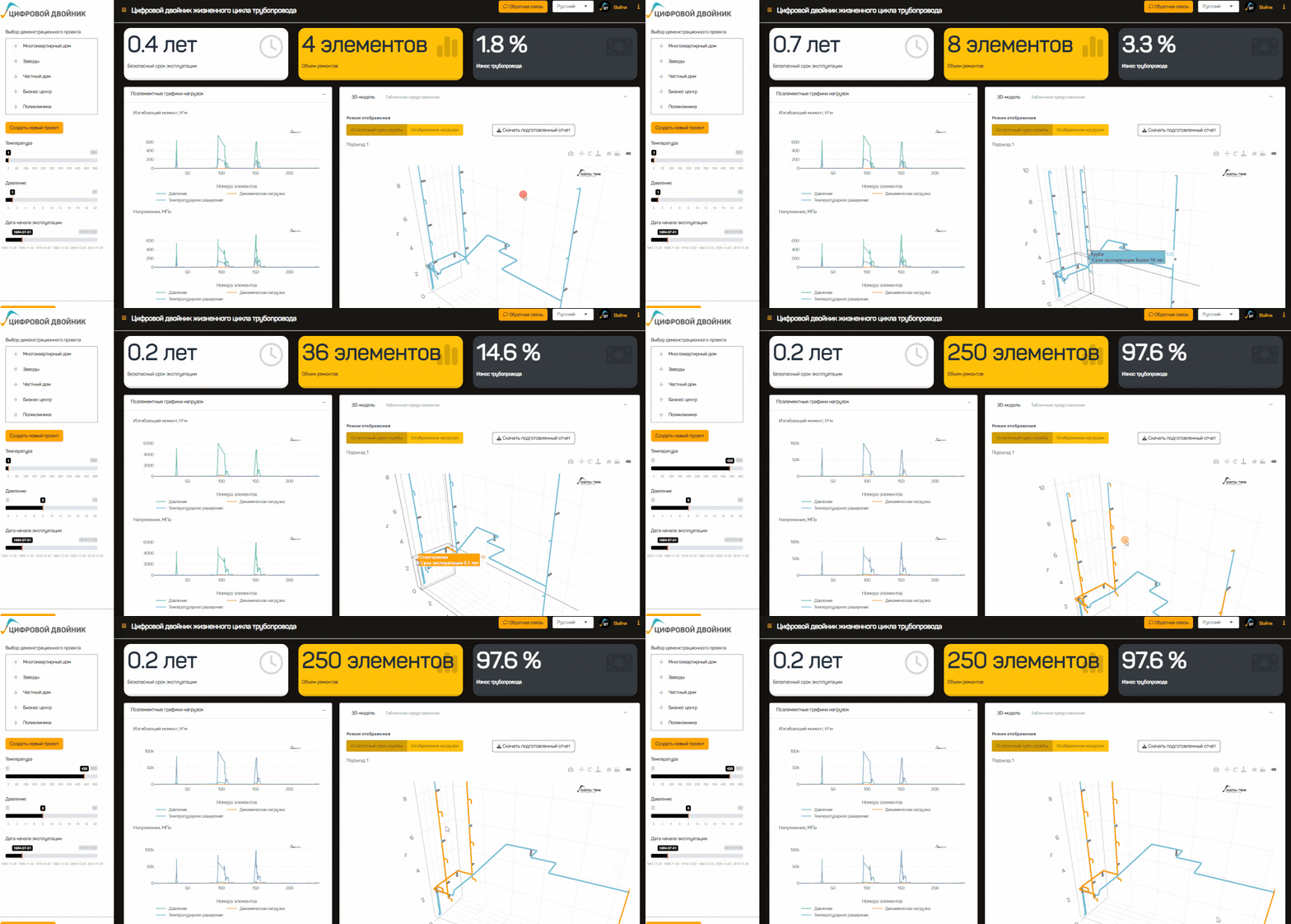
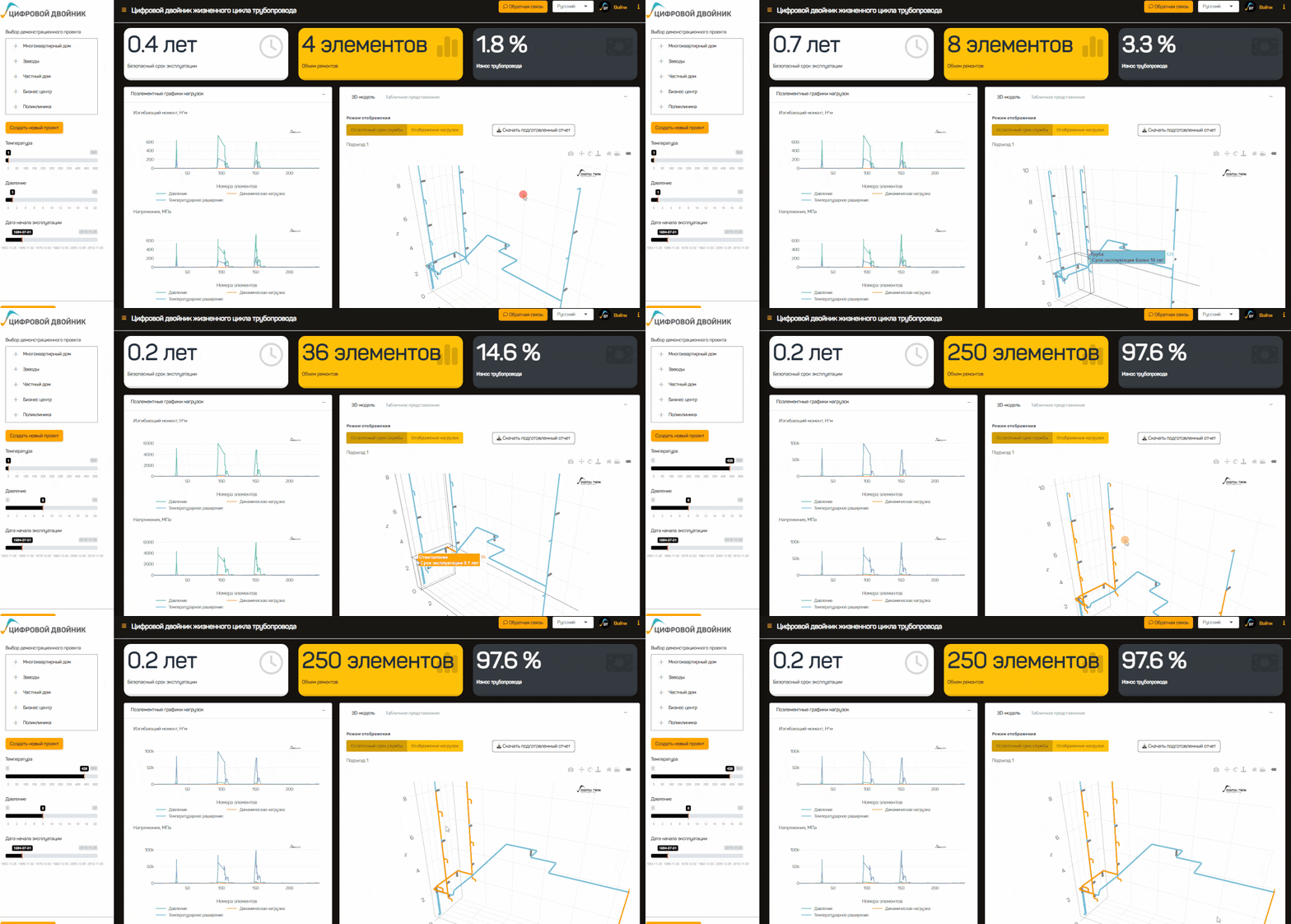
The system makes it possible to thoroughly model all operating parameters of the pipeline network: pressure, temperature, start-of-operation date and so on. This provides the most accurate picture of the current condition of the pipelines and makes it possible to assess on the fly the forecast changes in pipeline condition — modeling not the parameters, but the behavior as the parameters change!
04 Effective planning of repair works
Our system helps you build a well-grounded investment program for repair works, based on data about the condition of the pipelines. The system also recommends shifting from emergency repair to planned repair, which leads to cost savings.
05 Generation of detailed reports and data export
You can easily generate a report on the condition of the pipeline, including detailed information on every pipeline element and the entire plan of upcoming work. The finished report can be exported in a convenient format.

Manage risks, not consequences

We provide you with a comprehensive solution for effective control, element-by-element monitoring and analysis of infrastructure condition with our modern technology, which makes it possible to forecast potential errors and accidents well in advance.

Who benefits?

Water utilities

Water utilities

3D digitization, diagnostics, strength calculations and preventive repair of networks

Gas services

Gas services

Accurate determination of the strength and wear of gas pipelines, building a repair plan and preventing emergency situations

Management companies

Management companies

Visualization and control of the technical condition of facilities, prevention of failures and accidents, optimization of operating costs.

Continuous-cycle enterprises

Continuous-cycle enterprises

Inspection of pipelines and product lines for durability, identification of hazardous sections, preparation of operational and investment programs for repair and reconstruction.

Designers and builders of private homes

Designers and builders of private homes

Creation of spatial pipeline models, load calculation and preparation of a repair plan.

Want to learn more?

Learn about our technology that helps you avoid accidents, optimize repair and operating costs, and improve the efficiency and safety of pipelines. Our services include 3D modeling, strength and durability analysis, and the development of repair plans. Contact us today to discuss how we can help your enterprise improve its pipeline monitoring and maintenance processes. We are always ready to answer all your questions and to work with you to improve the safety and efficiency of your pipeline network.

Why is it important to calculate pipeline durability?

Why is it important to calculate pipeline durability?

Methodology for forecasting infrastructure durability

Learn about the physical and mathematical principles of our approach to forecasting the durability of infrastructure objects, based on the integral method of assessing force factors and the stress-strain state. Identifying and ranking potentially hazardous spots, preparing well-grounded repair plans and shifting from emergency repair to preventive repair — all of this reliably guarantees safe operation and extends the service life of your infrastructure.

Integral assessment method
The technology is based on the integral method, which provides an assessment of force factors, the stress-strain state, the residual life and the safe service periods of pipelines. The method's toolkit consists of infrasonic instruments for monitoring the dynamic characteristics of pipelines. At the core of the method lies mathematics — more precisely, its integral calculations, which make it possible to assess the real condition of the pipeline with high accuracy.
Digital model of the pipeline
Using 3D modeling and mathematical data analysis, a virtual reflection of the real object is created. This digital model accounts for all the main operating parameters — the material of the item, the operating medium, temperature, pressure and all dates throughout the service life.
Solving a set of dynamic problems
After the measurements are taken, a set of dynamic problems is solved concerning the distribution of displacements and forces arising in the pipeline elements. Here the main role is played by mechanics, whose equations make it possible to calculate the stress-strain state. Calculations are made of the pipeline deformations caused by weight, temperature and pressure. For each deformation, the displacements, rotation angles, torques and forces are calculated. The hoop, longitudinal and shear stresses caused by operating pressure and pressure changes are calculated.

Residual life calculation
To assess durability, the residual life is calculated and the safe service period is determined. The strength calculation includes comparing actual and allowable stresses. The probability of failure of a pipeline element and the failure rate are calculated. The residual life of each element is determined. The calculations are based on the industry methodology for assessing the strength and service life of pipes and welded joints with defects. For elements with a residual life of 10 years or less, compensating measures are developed.
Integrating the frequency and cyclicity of stresses
The intensity of short-term loads is analyzed, which makes it possible to determine strength and durability indicators more accurately. Dynamic vibrations at frequencies from 1 Hz to 86,400 Hz are used for calculating pipeline deformations, including deformations caused by the weight of the pipeline and the conveyed product, by changes in temperature and pressure during operation, and deformations arising during pipeline start-ups and shutdowns. Hoop and longitudinal deformations caused by operating pressure are also taken into account.

Forms of result

We offer various ways of working with us, letting you choose the most effective option in terms of time and cost. The initial consultation is free. You can use the service or work with us in depth.

Consultations

Consultations

Analytical platform

Analytical platform

Analytical report

Analytical report

Results in numbers

₽6bnsaved for partners every year
67%lower costs
72%lower accident probability

Test the platform right now

Tired of emergency repairs and unexpected problems? Dive into the world of digital twins with our innovative service! Forecast loads, identify weak spots, plan work and many other benefits — all just a couple of clicks away!

How do we solve the task?

01 Data preparation / Creating the pipeline
The input information for our service consists of design documentation, the results of previous engineering surveys and inspections, and data about operating conditions. This stage includes digitizing all the information, creating a spatial model of the pipeline and accounting for all known defects and measures.

If you have access to the service, the input data comes from the builder, where you create the pipe yourself.
02 Measurement (optional)
Иллюстрация: 02 Measurement (optional)
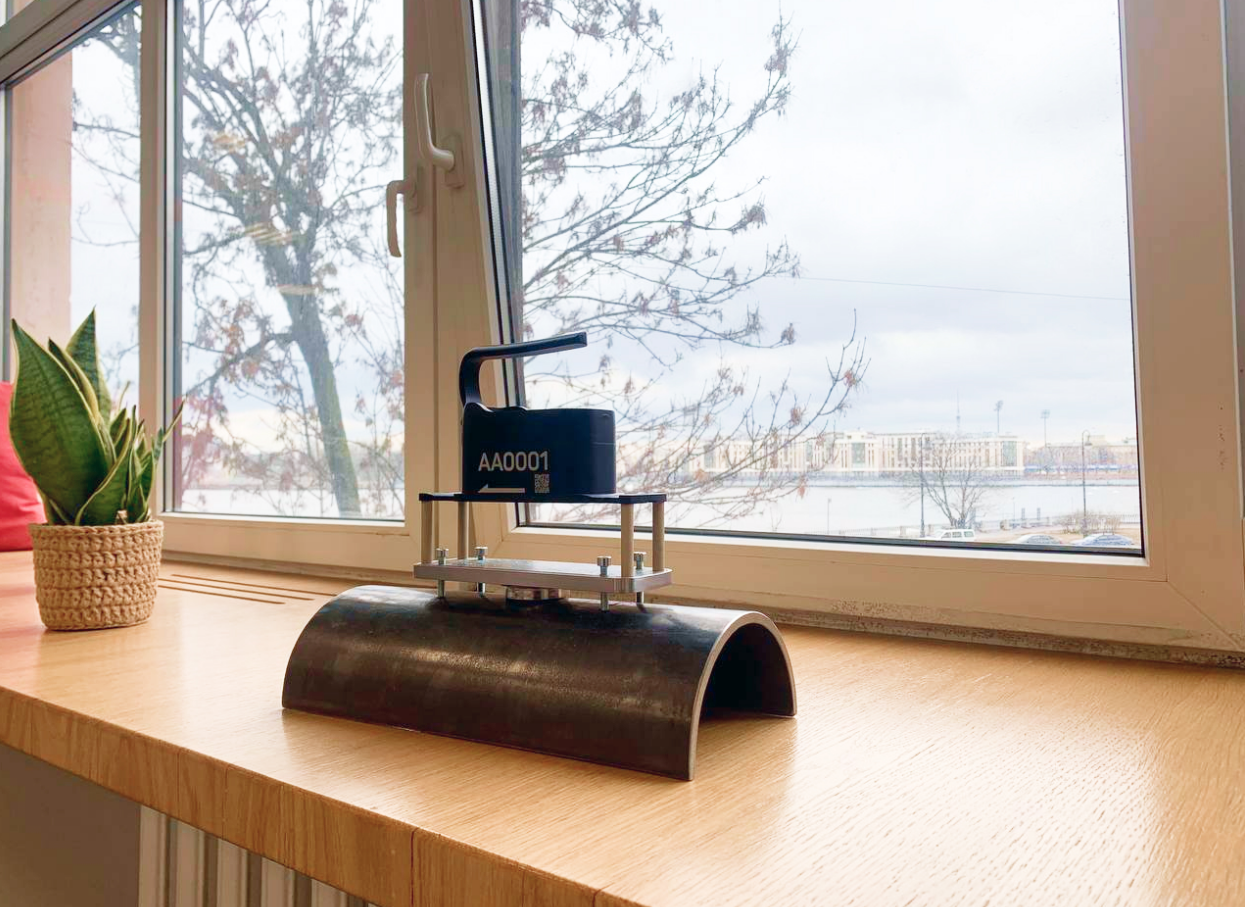
Using infrasonic monitoring instruments, the dynamic characteristics — for example, linear accelerations and angular velocities — are recorded at control points. This provides the determination of the actual dynamic loads for comparison with the design model of the object.
03 Structural calculation
Once the measurements are obtained, a set of dynamic problems is solved and the stress-strain state of each pipeline element is calculated. On the basis of this data, sections with reduced strength are identified and the residual life of each element is assessed.
04 Report preparation
Based on the analysis, a detailed report is produced that includes a ranking of pipeline elements by degree of accident risk, the forecast periods of their safe operation, and recommendations for preparing well-grounded investment programs.
05 Ongoing support
Our services do not end at this stage: we offer support on preventive repair matters, ensuring continuous monitoring of the condition of your infrastructure and the timely identification and ranking of potentially hazardous spots.

Questions customers ask

What exactly is the DT.pipeline system — a service or a full-fledged hardware–software platform, and what components does it include?

The system can be implemented in several configurations:

  • As a service for preparing reports, technical conclusions, recommendations, and maintenance plans;
  • As the DT.pipeline (Digital Twin of Pipeline) software application for modeling the pipeline structure, inputting parameters, performing strength and lifetime calculations, and visualization;
  • As a hardware–software complex for evaluating strength and durability, equipped with periodic infrasound diagnostic devices;
  • As a real-time leak detection system, using continuously operating infrasound sensors integrated with DT.pipeline analytics;
  • As a cloud service, processing field measurements (or virtual data) to assess pipeline strength and residual life.
How does it work?

DATA COLLECTION:

  • Infrasound devices record the spatial vibrations of the pipeline in three axes.
  • Additionally, mechanical characteristics, welded joints, operational loads, and temperature conditions are considered.

INTEGRAL STIFFNESS ASSESSMENT:

  • Changes in pipeline stiffness are analyzed, accounting for defect impact on strength loss.
  • Based on dynamic characteristics, deviations indicating a reduction in load-bearing capacity are identified.

FAILURE PREDICTION:

  • Material degradation models are used, incorporating detected defects.
  • Failure probability is calculated considering accumulated damage and its kinetics.

Thus, the system does not merely detect defects but predicts the loss of operational reliability by linking defect data to residual life calculations.

Our organization is already doing in-line diagnostics, why should we pay for technical condition assessment?
  • The proposed technology can be considered as a supplement to the existing activities on diagnostics, including in-line diagnostics.
  • Its purpose is to determine the time and location of possible failures, taking into account operating conditions and all available data, including in-line diagnostics results.
  • The goal of in-line diagnostics is to identify the maximum number of defects (deviations from design and regulatory requirements). However, correcting all identified defects is not economically viable. As the quality of diagnostics (including in-line diagnostics) improves, the number of detected defects increases, but so does the level of uncertainty.
  • The technology serves as a tool for interpreting the vast amounts of data accumulated from in-line diagnostics to estimate the deadlines for defect elimination. In reality, only 10-15% of defects pose a real threat, but in-line diagnostics does not answer the question of which defects are critical.
  • In-line diagnostics is mainly used for linear pipeline sections with simple configurations. For most process (in-shop) pipelines, this method is either not applicable or not economically justified.
  • The technology also includes the ability to perform diagnostics using a portable vibrodiagnostic device, which does not require significant resources and time.
How are leaks diagnosed?
  • The Pipeline Digital Twin utilizes a leak detection method based on analyzing the dynamic characteristics of the pipeline itself, rather than just the parameters of the transported product. The method is based on:
    • Dynamic analysis of mechanical loads – modeling pipeline behavior during a leak, considering induced oscillations and their amplitude-frequency characteristics.
    • Infrasound sensors – installing measurement devices at intervals depending on pipeline pressure, detecting pipeline vibration deviations from the norm.
    • Frequency response module – pre-calculating frequency patterns, which are updated during calibration.
    • Integration of thermohydraulic and mechanical dynamic calculations – ensuring more precise identification of leak zones based on characteristic structural dynamic deviations.
    • How the Digital Twin method differs from common leak detection methods:
    • Standard Leak Detection Systems (LDS) primarily rely on flow parameter analysis (mass balance, negative pressure wave method, RTTM), which limits sensitivity (sensitivity and detection time are limited by the flow-measurement principle itself) and results in detection times of around 30 minutes.
    • The Digital Twin method allows detection of leaks as small as 0.1% by registering mechanical deformations in the pipeline and analyzing vibration characteristics.
    • Traditional methods have a high probability of false alarms, especially during pressure fluctuations, pump startups/shutdowns, and other process changes. The Digital Twin method minimizes false alarms by analyzing pipeline behavior instead of fluctuating flow parameters.
    • Thus, the Digital Twin technology provides more accurate and faster leak detection, reducing false alarms through a comprehensive approach that combines dynamic modeling and localized pipeline structure monitoring.
What is the difference between 'Technical Condition Monitoring' in the Pipeline Digital Twin and 'Standard Diagnostics' as part of pipeline maintenance?

Technical Condition Monitoring in the Pipeline Digital Twin is a comprehensive assessment of pipeline durability and reliability. Unlike traditional diagnostics, it is based on an integrated analysis of the entire pipeline, rather than individual components.

Key differences:

  1. Operational and failure history
    • Technical Condition Monitoring considers the full history of construction and operation, analyzing failure and damage statistics.
    • Standard diagnostics does not account for failure statistics.
  2. Diagnostic methods
    • Technical Condition Monitoring applies infrasound monitoring of the entire pipeline, as well as dynamic and static load calculations.
    • Standard diagnostics uses localized methods, such as defectoscopy of individual pipes or welds and ultrasonic thickness measurements.
  3. Identifying defect causes and mechanisms
    • Technical Condition Monitoring analyzes all diagnostic data throughout the pipeline’s service life, including weld inspections from construction.
    • Standard diagnostics does not account for material properties or actual operating loads.
  4. Defect progression forecasting
    • Technical Condition Monitoring calculates durability and residual service life indicators for each pipeline element.
    • Standard diagnostics only provides estimated defect growth rates for corrosion and erosion, while all other defects are assessed using a pass/fail method.
  5. Maintenance planning
    • Technical Condition Monitoring generates recommendations based on calculations, including:
    • Additional defectoscopic inspections
    • Operating mode restrictions
    • Repairs (insulation and/or pipe replacement)
    • Adjustment of pipeline elevation and alignment
    • Engineering protection in geologically complex areas
    • Standard diagnostics only generates recommendations based on detected defects.
What are confirmed implementation examples and achieved effects?

Pilot applications conducted on assets of major Russian pipeline and gas transmission operators, and industrial facilities.

Results: reduced failure rates, a twofold reduction in specific maintenance costs, and a threefold decrease in physical repair volumes.

High‑stress zones were identified; safe operation periods refined; repair planning accuracy and diagnostic targeting improved.

All 90 questions and answers

Get in touch

Request a proposal

Describe your task and leave a contact — we'll clarify the details and prepare a tailored proposal.